Chebacco News 81 – Aluna/Luna

Lapstrake Chebacco Update by Bruce Bateau

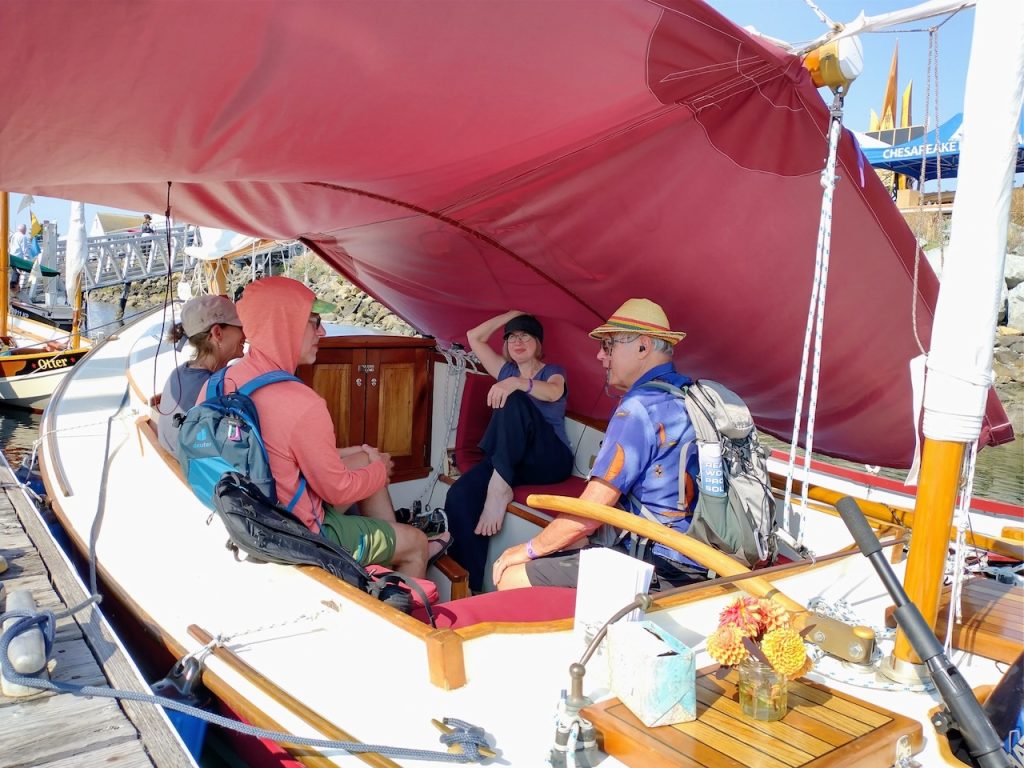
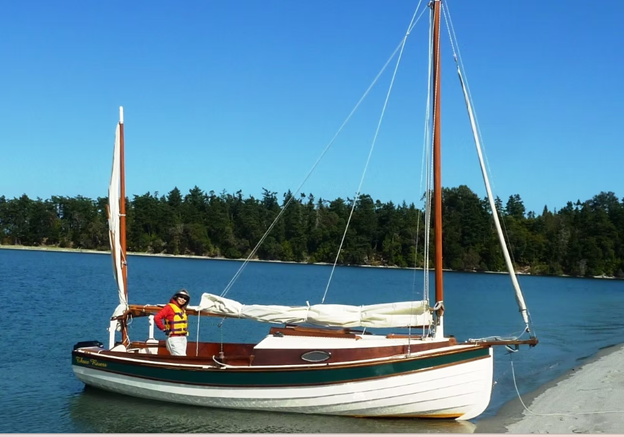
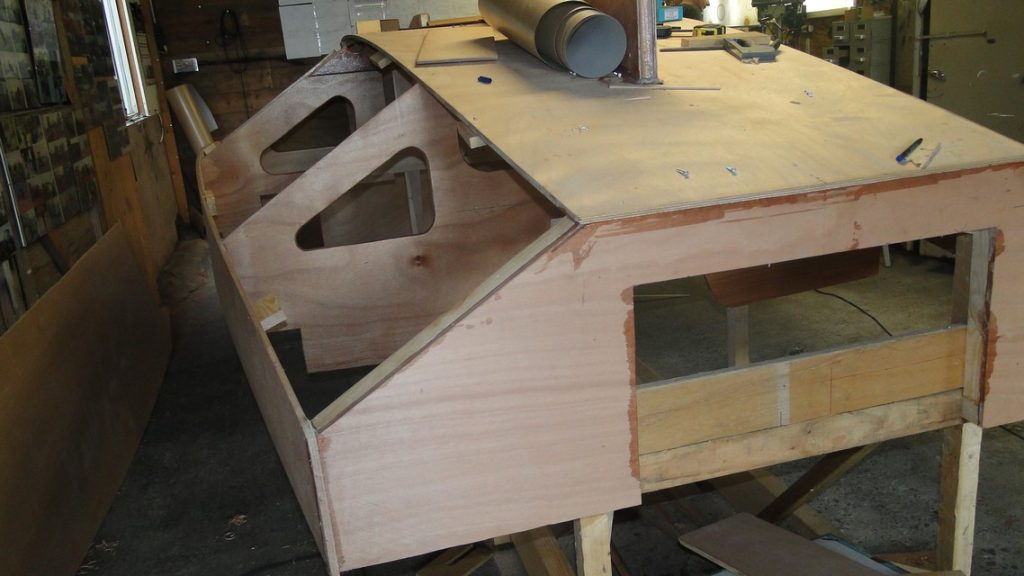
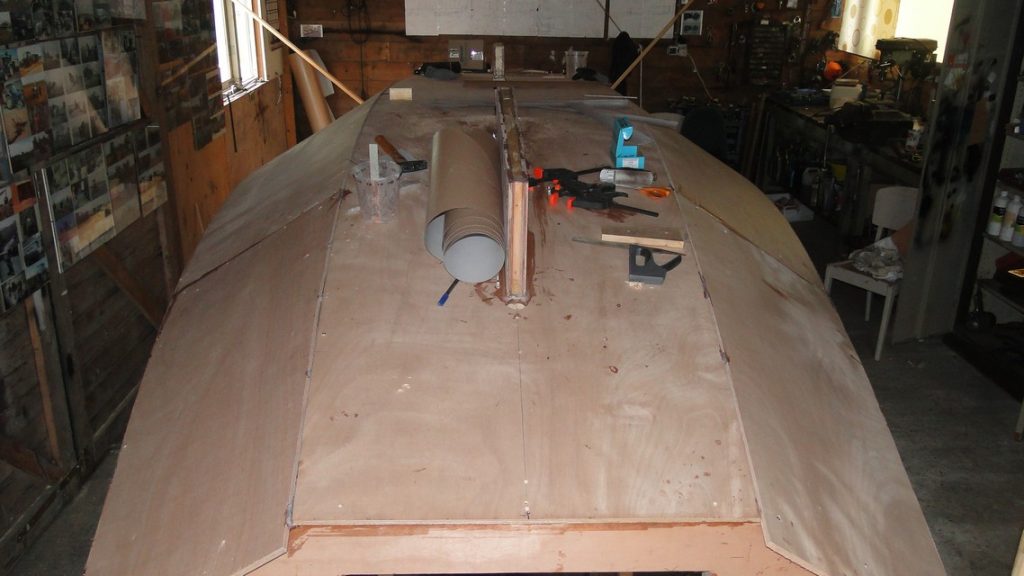
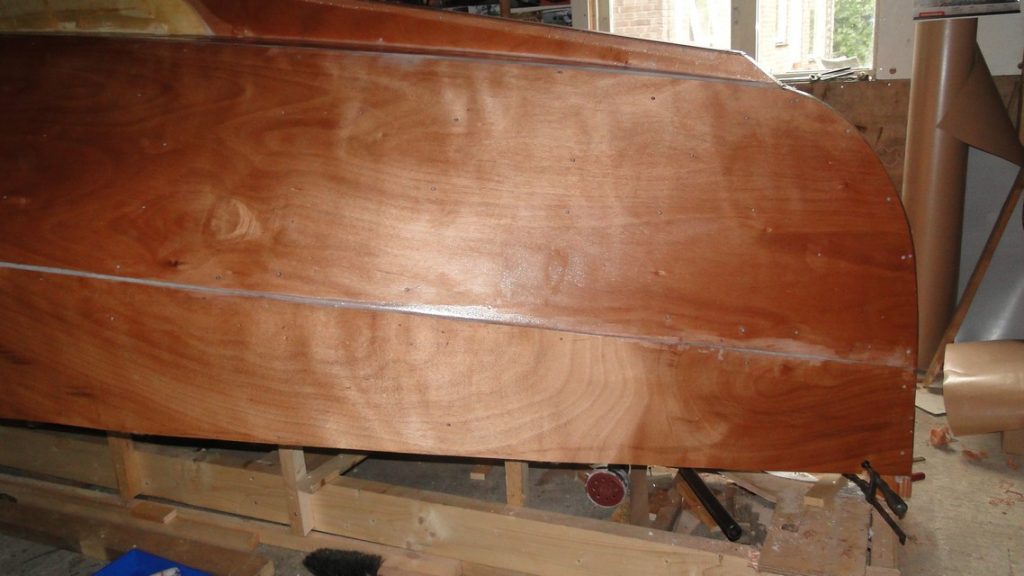
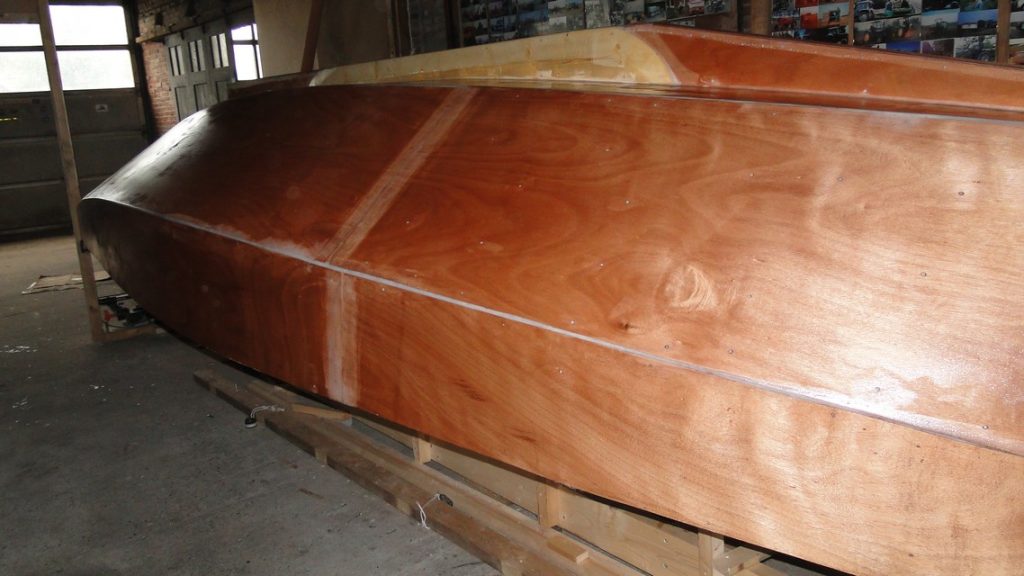
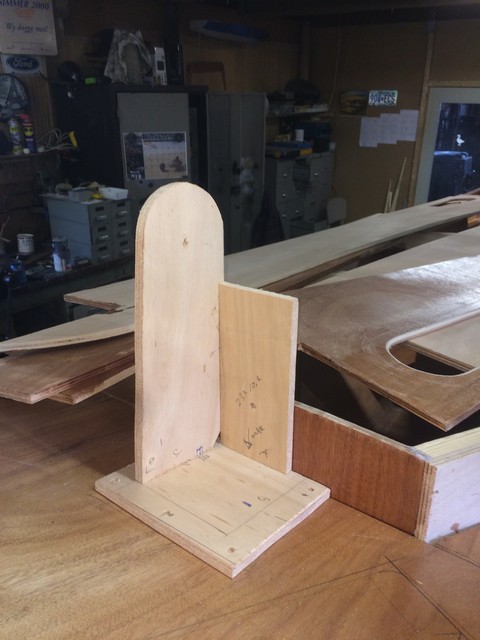
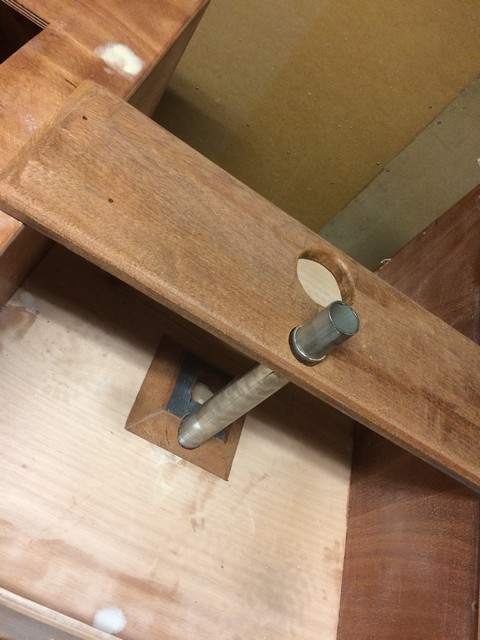
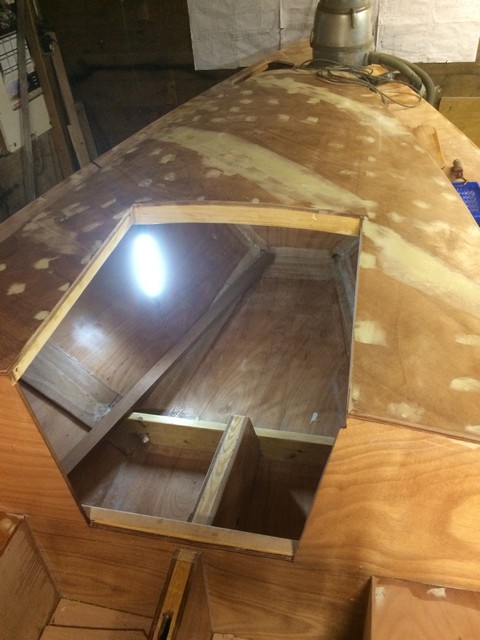
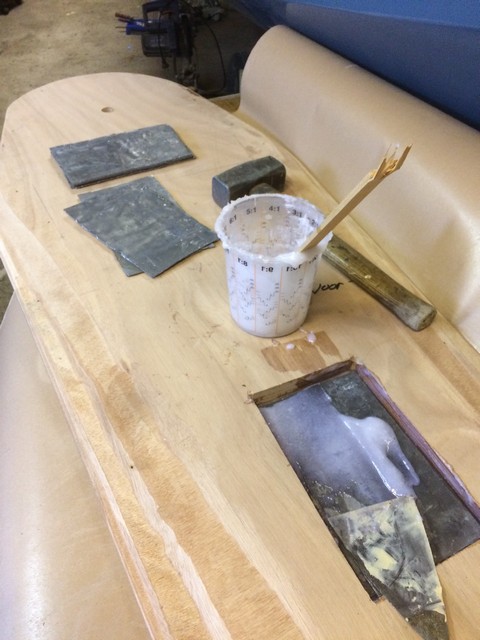
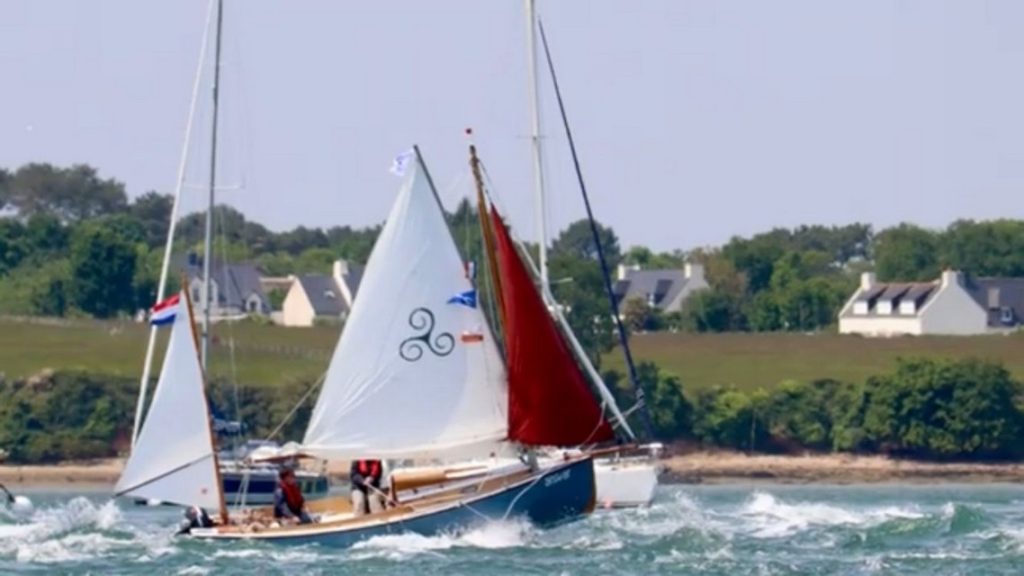
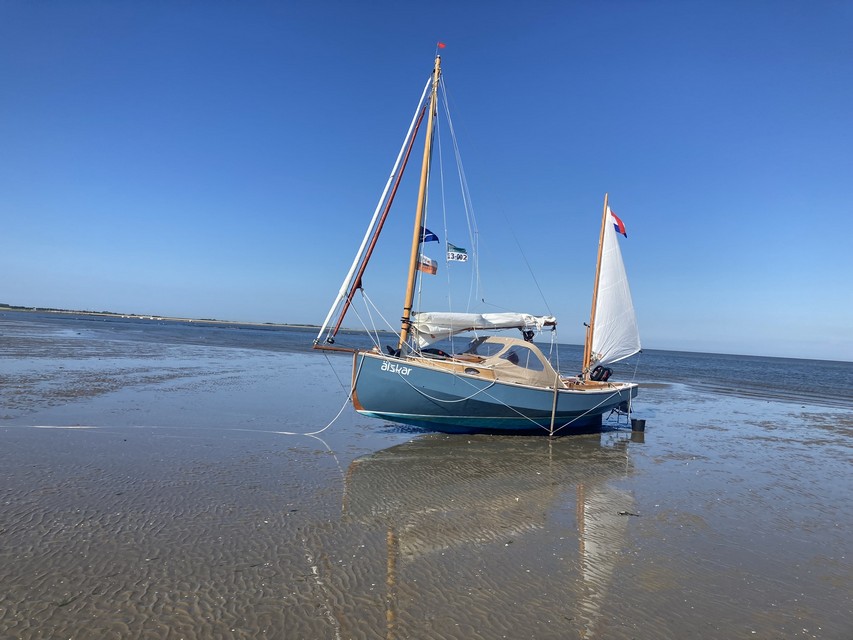
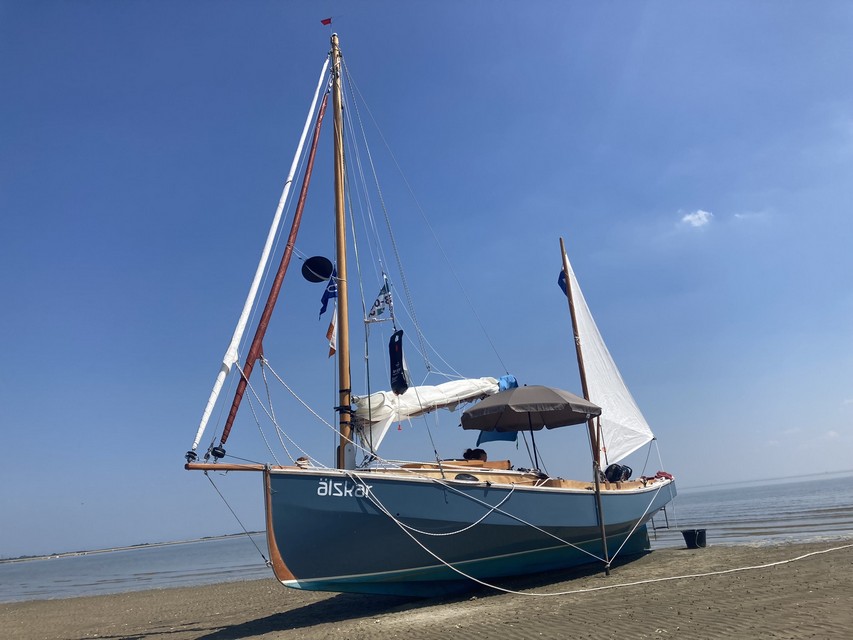
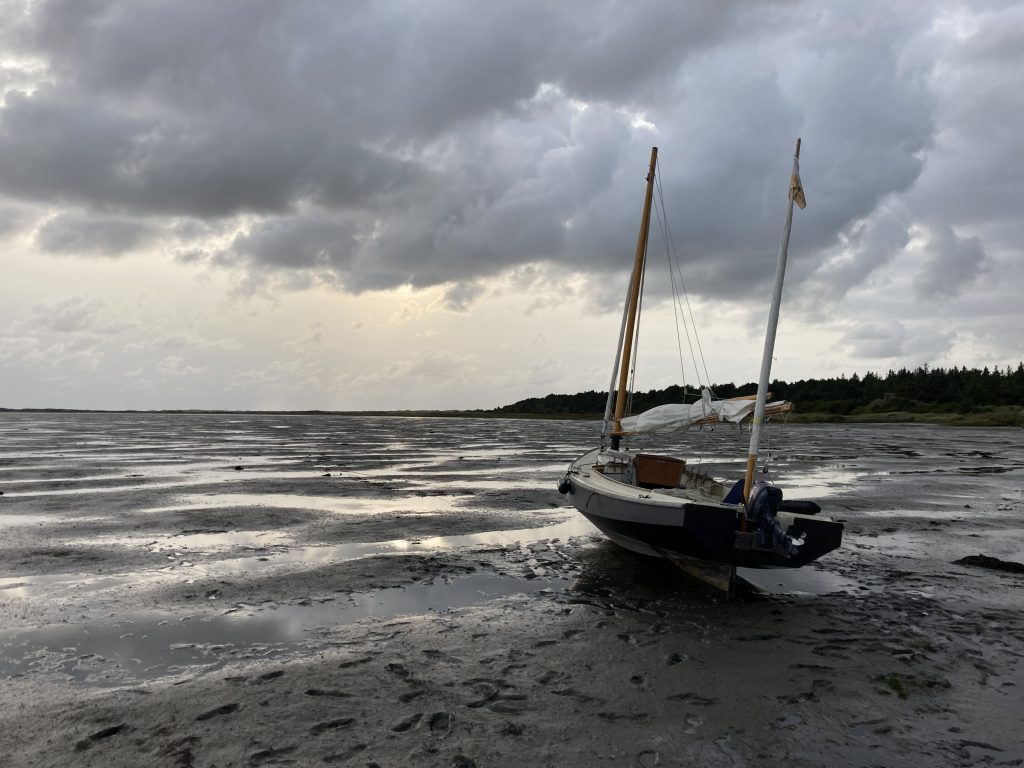
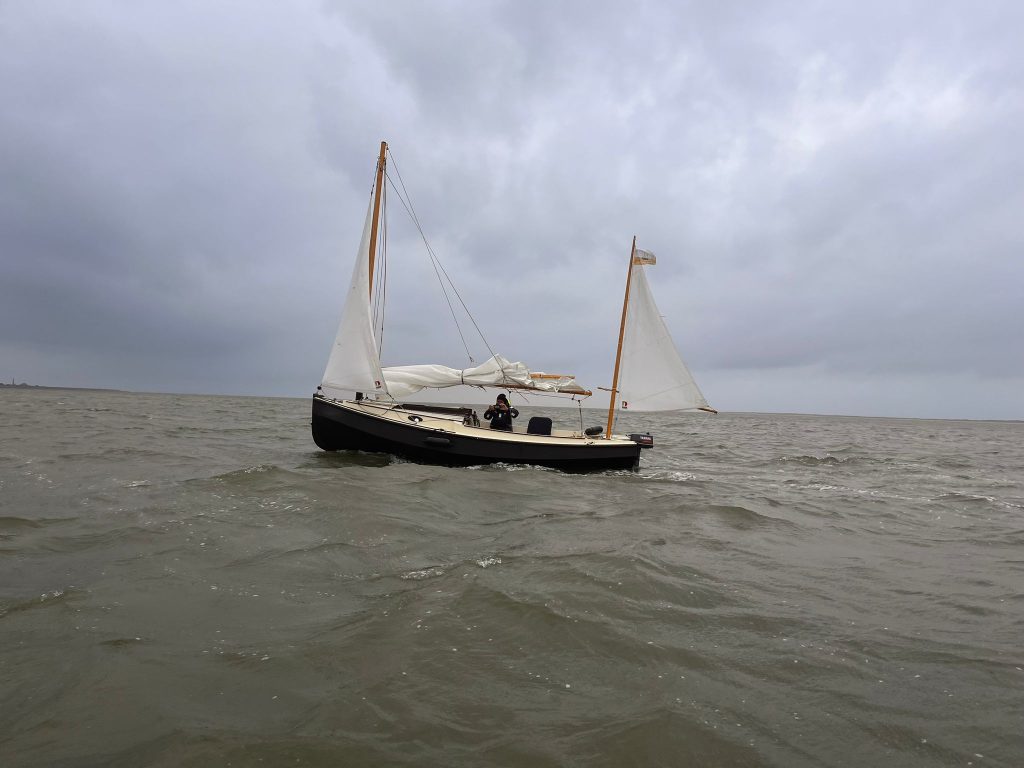
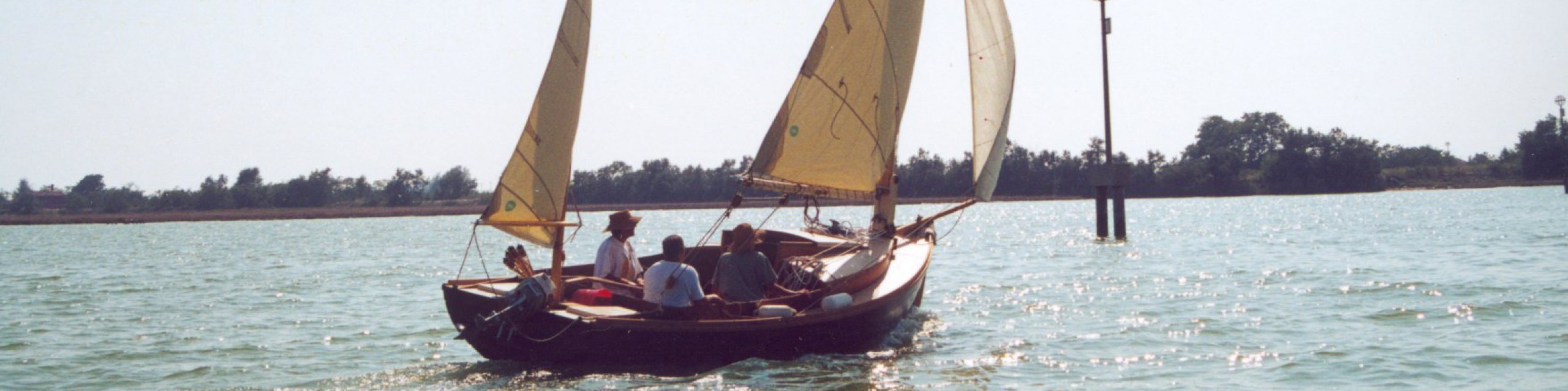
Hello Chebaccans! I’m writing to update you about the nineteen foot lapstrake Chebacco that was constructed by Jerome McIlvanie of the high desert town of Yakima, Washington between 1996 and 2001. Apparently, Jerome, a professional machinist, wasn’t a sailor, nor was his wife. She told me that building a boat was a dream for Jerome. He had taken some classes, likely at the NW School Of Wooden Boat Building, and prior to this had built an Adirondack guideboat. After being sailed just once – from the launch ramp to the marina at the 2001 Port Townsend Wooden Boat Festival – his Chebacco was sold to a man from Salem, Oregon who dreamed of sailing her up the Inside Passage in Canada. The boat was stored under a tarp in a field for the next 19 years. Strangely, neither Jerome nor the second owner named the boat.

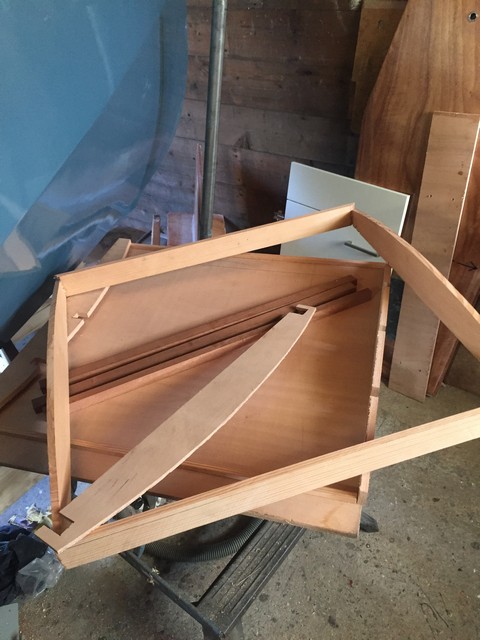
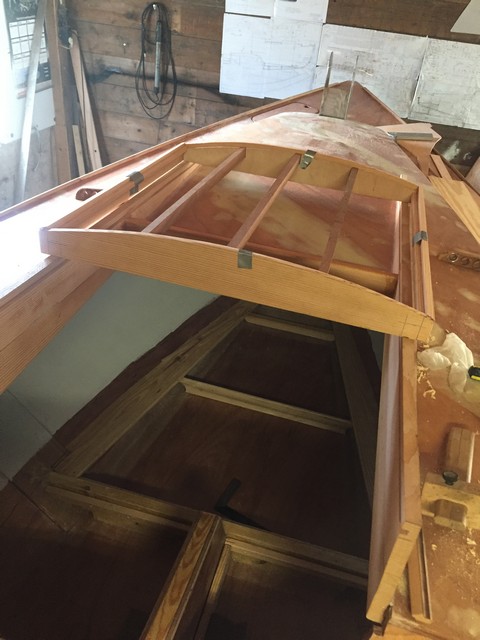
Just as the covid pandemic swept across the US, my friend Michael Bogoger introduced me to owner #2. I contemplated buying the boat, but there was more work than I could handle. The cockpit had filled with leaves, water, and other nasty things. There was some rot and a lot of uncertainty about the hull/centerboard trunk. Michael and his friend Doug Follet, were braver than I and purchased the boat, hauled it up to Olympia, Washington and commenced work. They removed the rot and finding the hull solid, rebuilt the cockpit. They only sailed the boat a few times and didn’t work on the rigging, which was in need of some tuning. Michael named the boat Aluna, after a Columbian tribe in a documentary film of the same name.

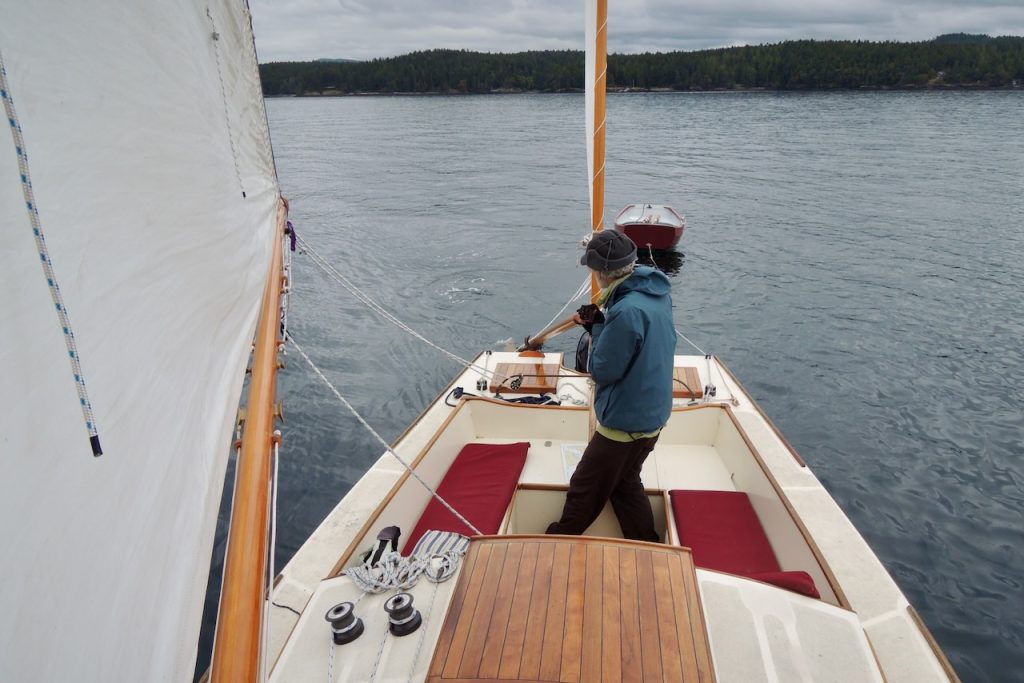
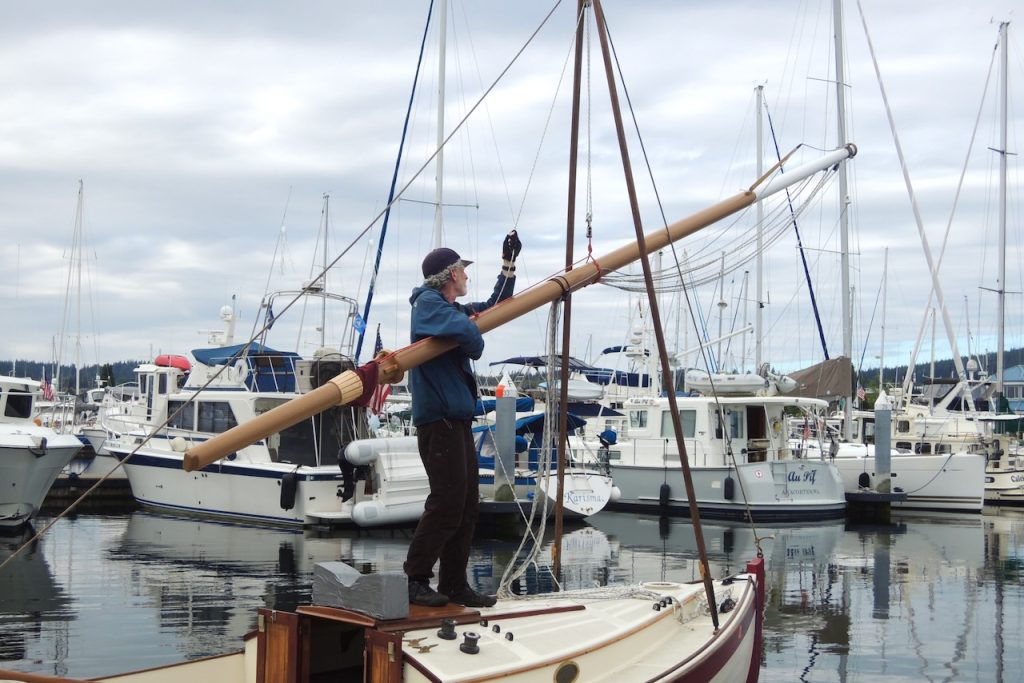
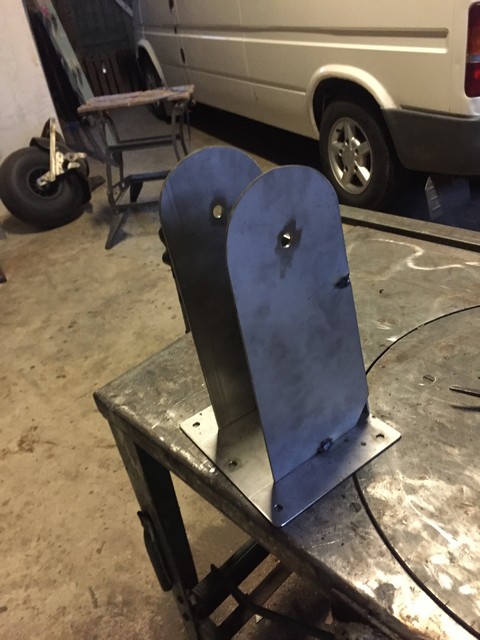
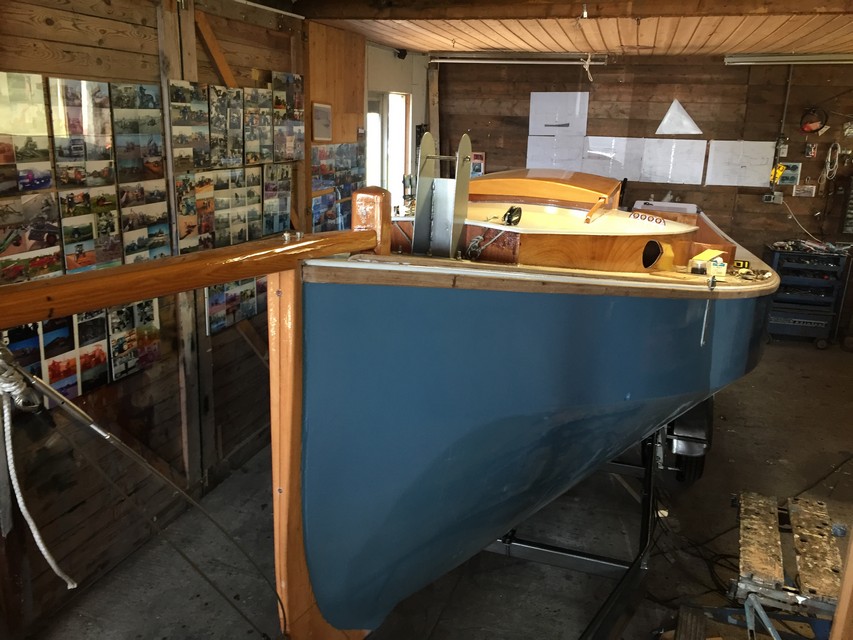
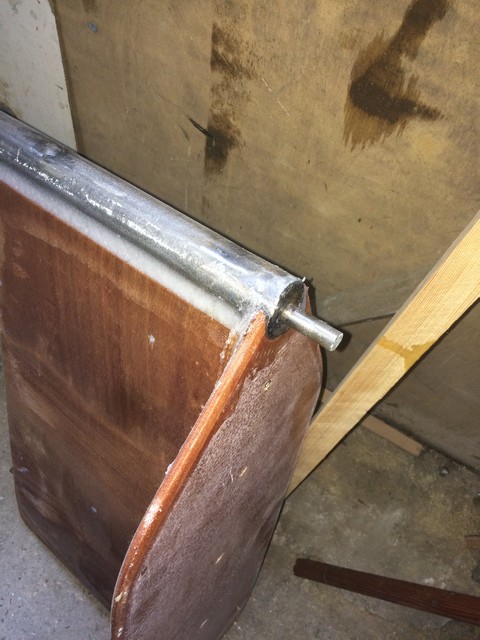
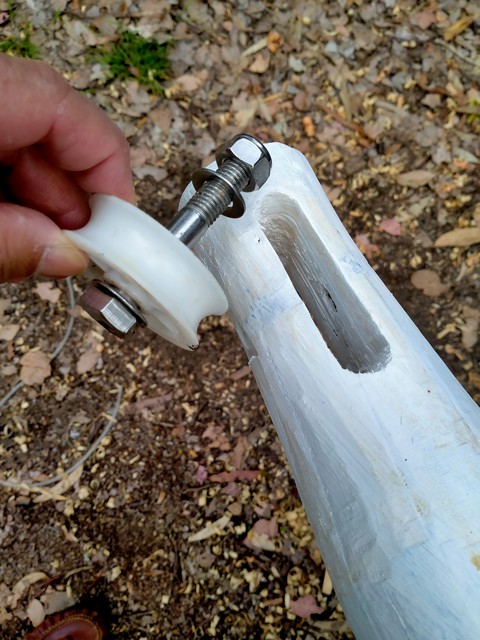
In late 2021, I acquired Aluna from them, and started to fit her out for cruising. Andy Schmidt helped me sew cushions as well as cockpit and storage tents, while Tim Lemon led the rigging and reefing re-do and built/installed a new rudder (the original aluminum version was corroding and not built to specs). The mast is hollow, but keel stepped, so it was extremely challenging to place it through the cabin top. Tim built a set of sheer legs which allowed a more certain and elegant way to install and remove it. Tim also helped me achieve my strong desire to have a sculling oar (13 feet) so that I could minimize the need to motor on windless days or through a marina. If you want to read about the whole fitting out story, there’s a long thread at the Woodenboat Forum.

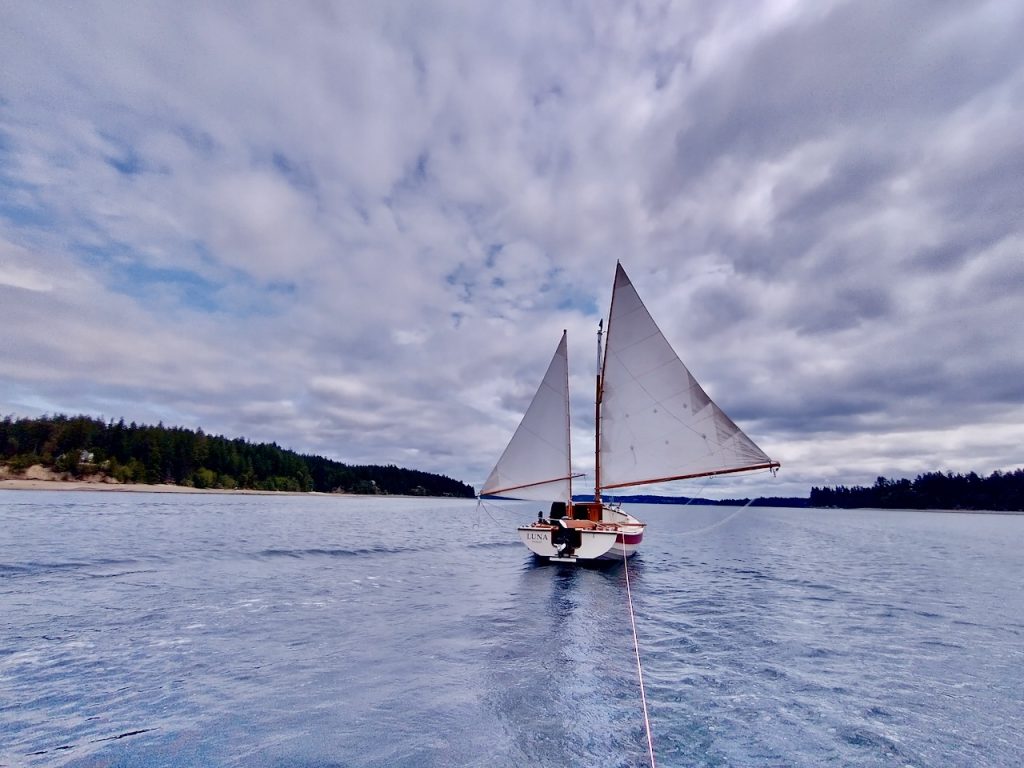
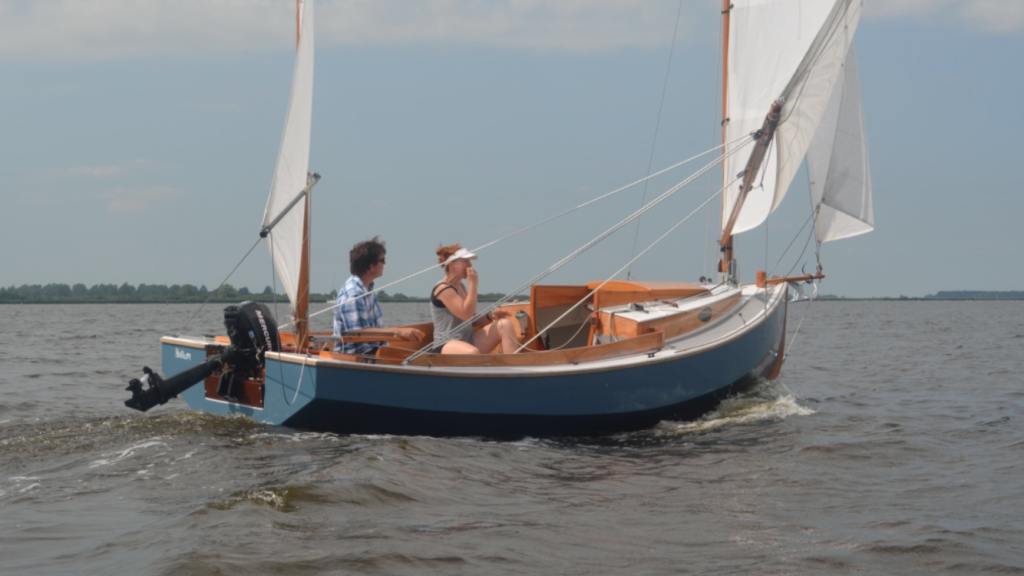
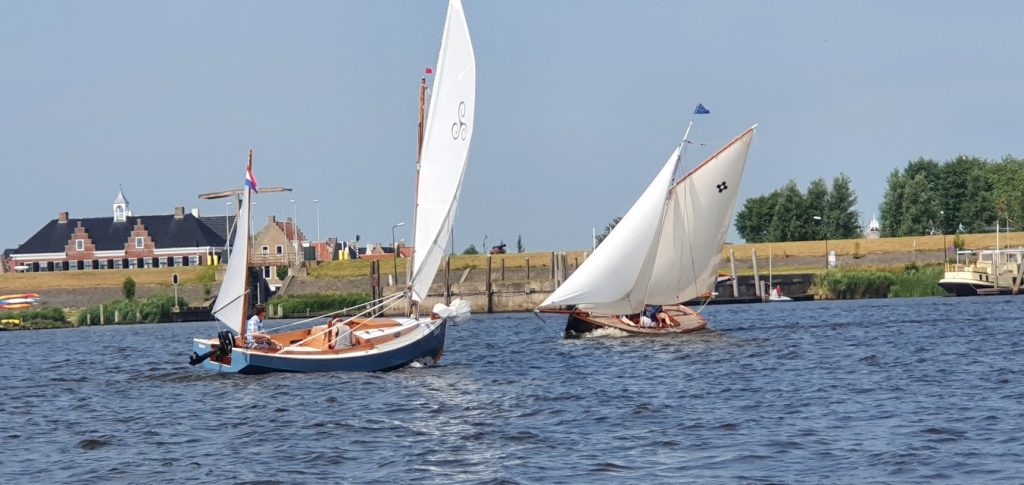
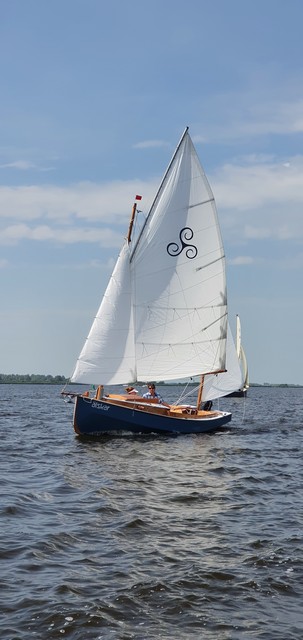
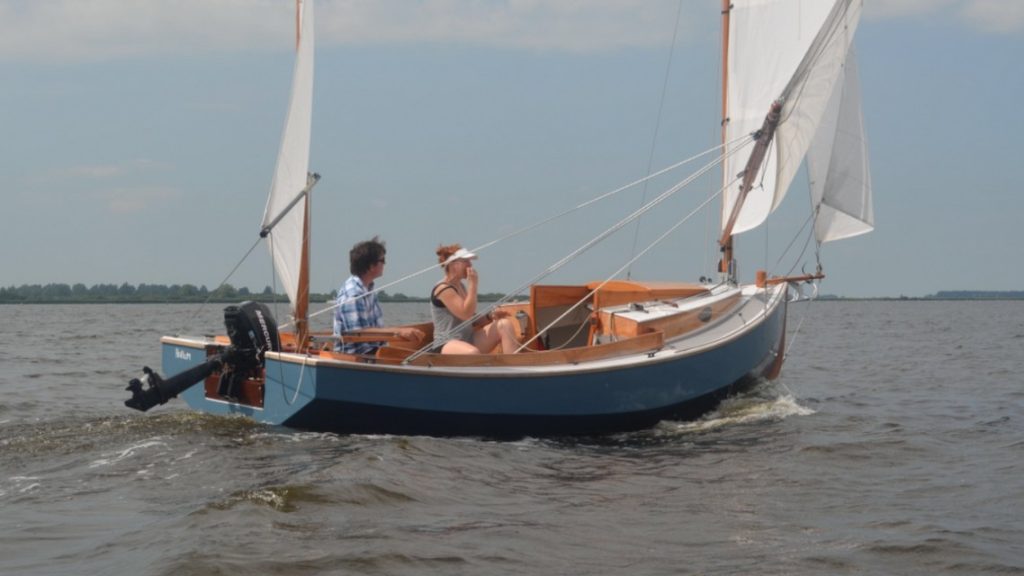
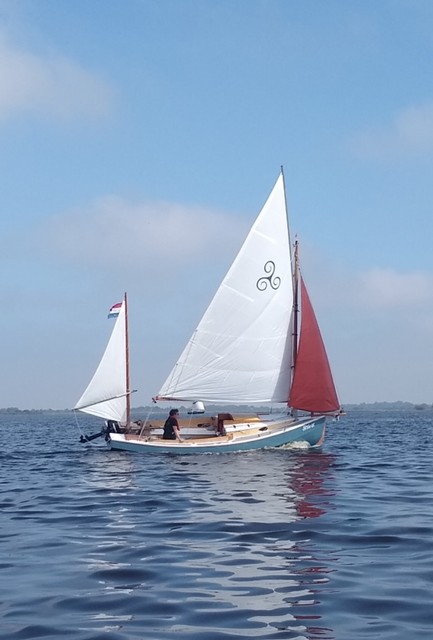
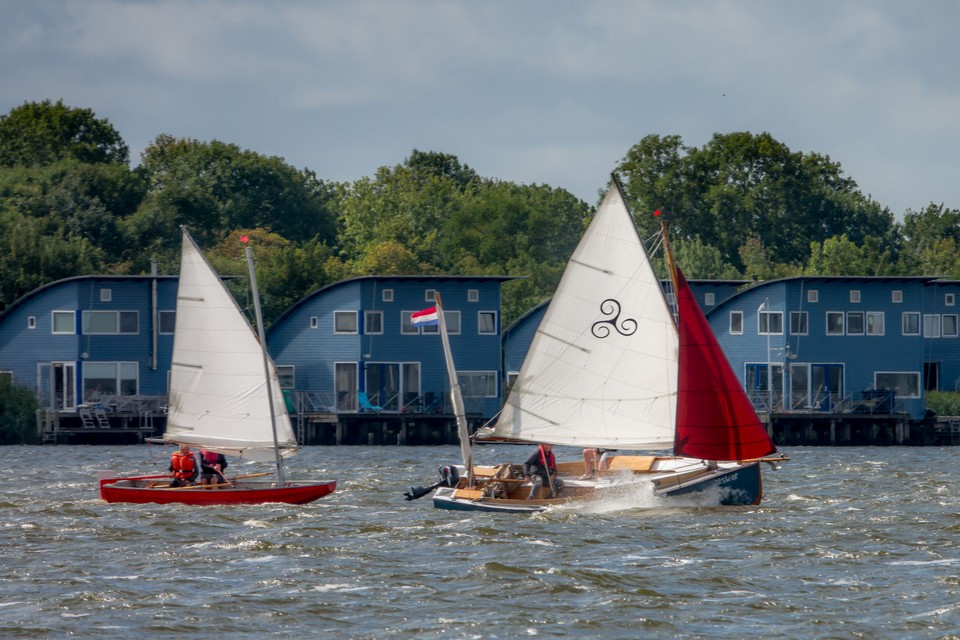
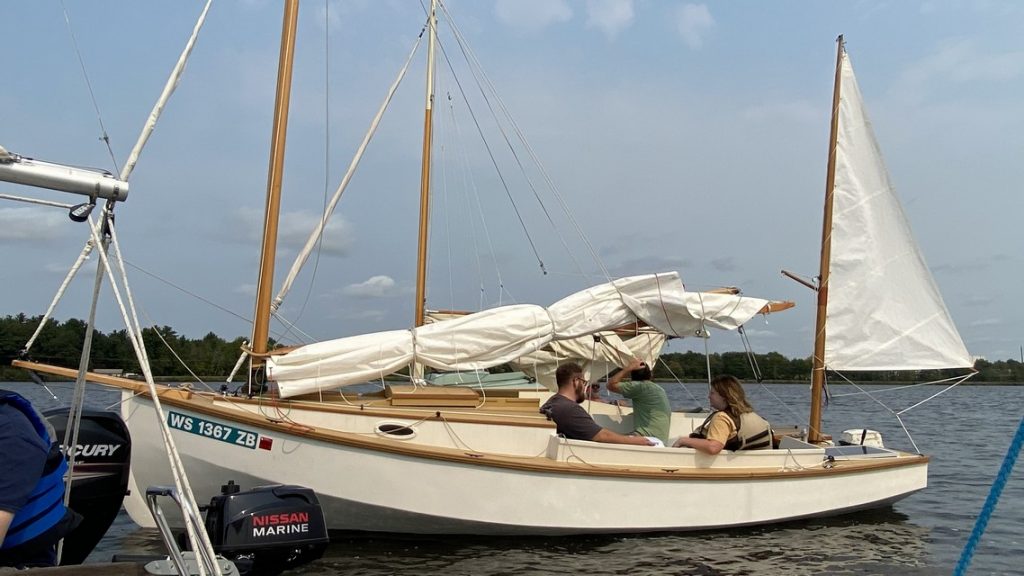
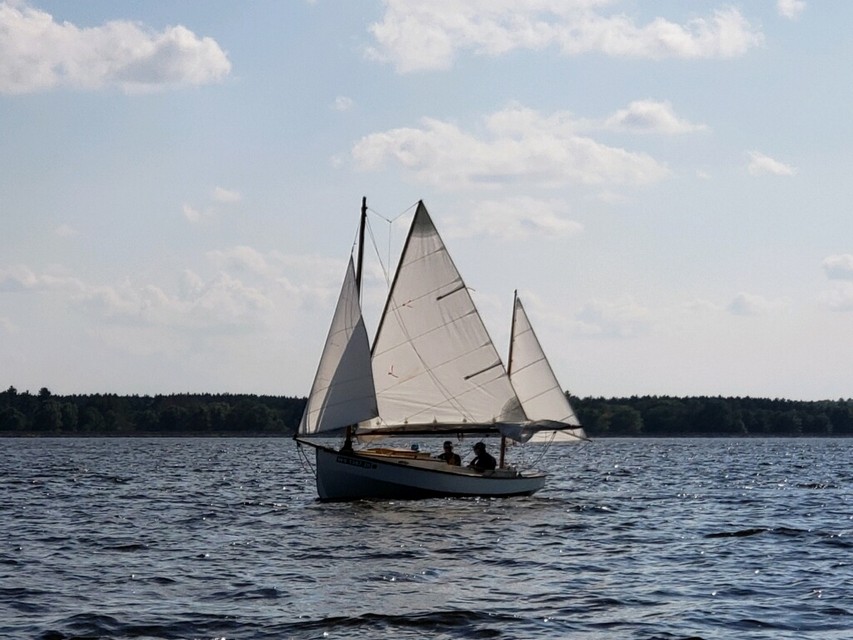
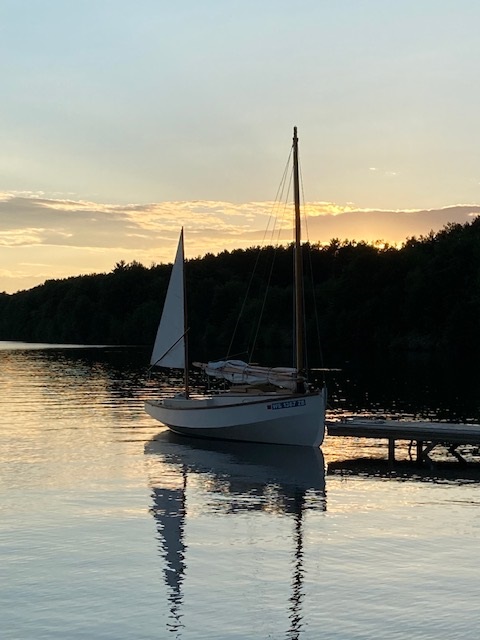
Given that after a few days of sailing, I’d logged more hours aboard than anyone in her 20 year history, I decided to rename her Luna. Since 2022, my wife and I have cruised Luna along the tidal areas of the Columbia River, around Puget Sound, through the San Juan Islands, and as far north at British Columbia’s Gulf Islands. Our longest voyage yet was three weeks. She’s a very comfortable boat and a dry sailer, though I’ve never been able to staunch a small leak at the base of the centerboard trunk in the cabin. Being a Chebacco, she’s full of quirks, but that’s a topic for another post.

Luna’s home port is along the Columbia River in Portland, Oregon, but sails to points north in the Salish Sea each summer. You can read about some of our adventures at my blog www.TerrapinTales.WordPress.com.
Chebacco News 80 – Three Rivers has a new home

I was very pleased to receive this email from Mike Capriola in North Carolina about his purchase of Three Rivers:

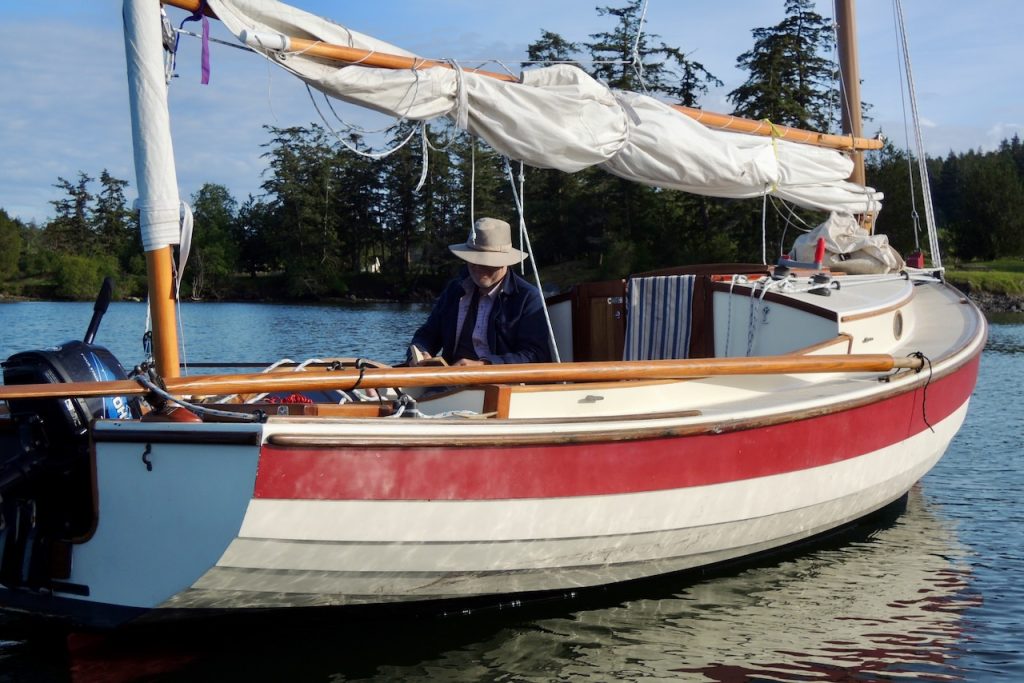
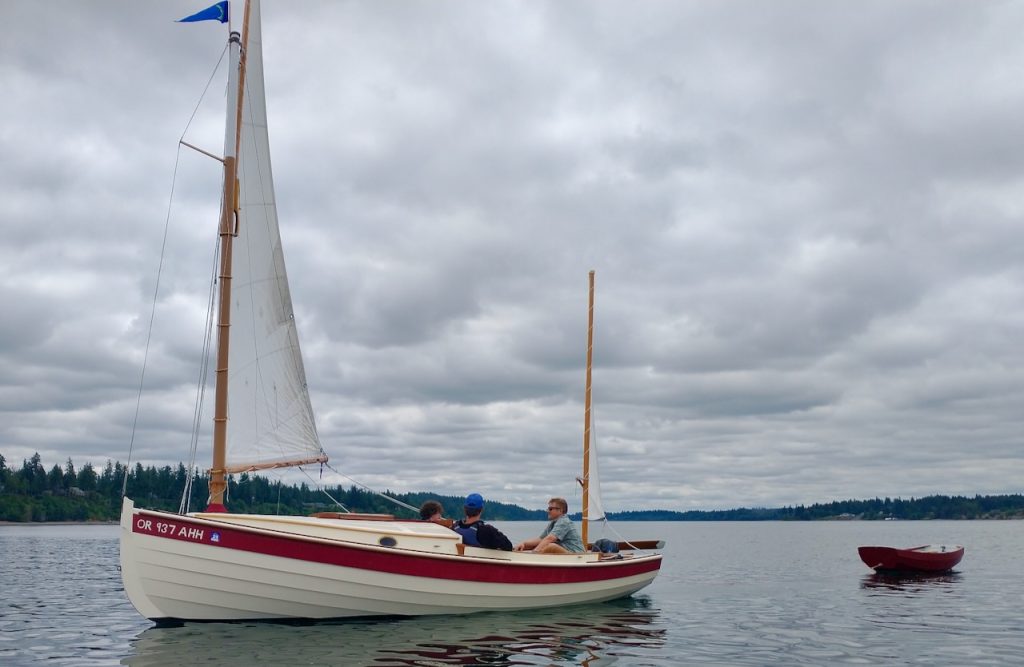
Hello.  I have recently purchased Three Rivers (3R) which is a 20 foot chebacco sailboat built by Ben ho and launched in 2007. Specifics in Ben’s own words:

“Measuring 19 feet 8 inches with a beam of 7 ft 9 inches, Three Rivers has that perfect balance of a spacious cockpit and a functional cabin for two. For the rainy nights, there is a cockpit enclosure that completely covers the cockpit and it is rain and wind-proof. She weighs 1500 lb, of which 250 lb is from four marine deep cycle batteries which also act as the ballast. The design is revised partly based on the Raised Deck (RD) version of Chebacco, with a raised floor providing a self-draining cockpit, strengthened backbone/keel in the after-end of the cockpit, and a larger rudder.”

Three Rivers in her prime in 2015 (Picture by Ben Ho)

Ben sold 3R in 2017 and the new owner eventually donated her to Northwest Maritime in Port Townsend WA to be sold to raise money for this wonderful non-profit. It would have taken very little to upend my half-baked intention to drive 2800 miles to purchase a boat I had not seen and do not know how to sail. Any unkind word, sarcastic comment, or question of my sanity might have been enough to scuttle the whole idea. Instead I was met with nothing but support and encouragement which surpassed anything I could have hoped for.

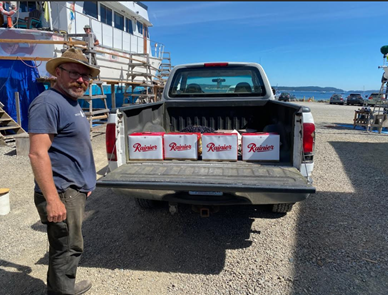
Aside from assisting me in tracking down a boat he sold 8 years ago, Ben Ho tirelessly and patiently answered my many questions, and indeed he continues to do so as I move forward with restoration work. David White at Northwest Marine was consistently polite, encouraging and obliging.  Marc Cartner of Port Townsend performed a careful inspection of the trailer and repaired and serviced it to make sure it was up for a long journey. That he did an excellent job is evidenced by the fact that the trip was accomplished without a hitch. And Blaise Holly of Haven Boat works inspected 3R, offered advise of what needed to be repaired and refused to take any money for his services. He did, however, accept a shipment of beer.

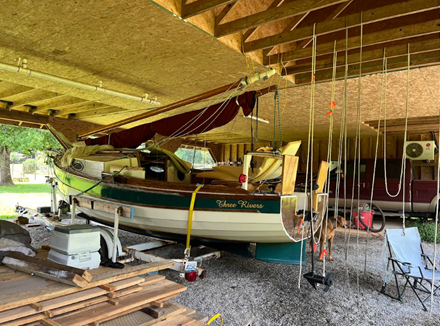
Three Rivers is now safely home under cover in North Carolina.

While still a beautiful boat Three Rivers definitely is in need of some cosmetic attention and a few other repairs.  All the brightwork needs to be refinished and the bronze hardware could use some polishing. The hatch cover also needs work.

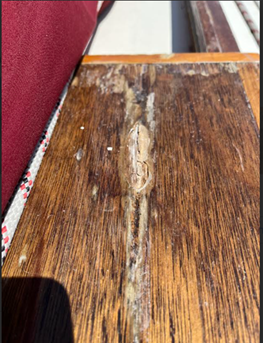
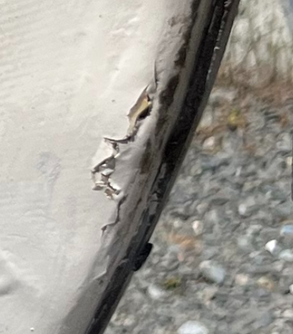
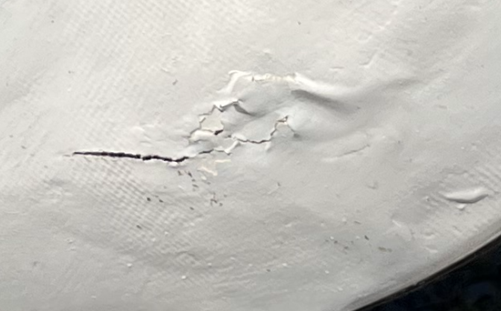
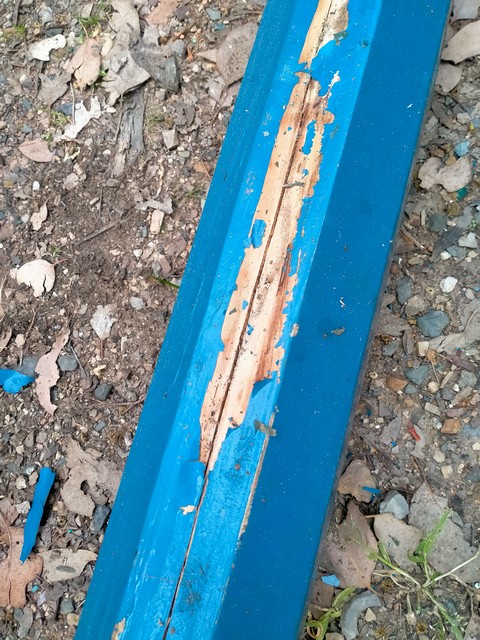
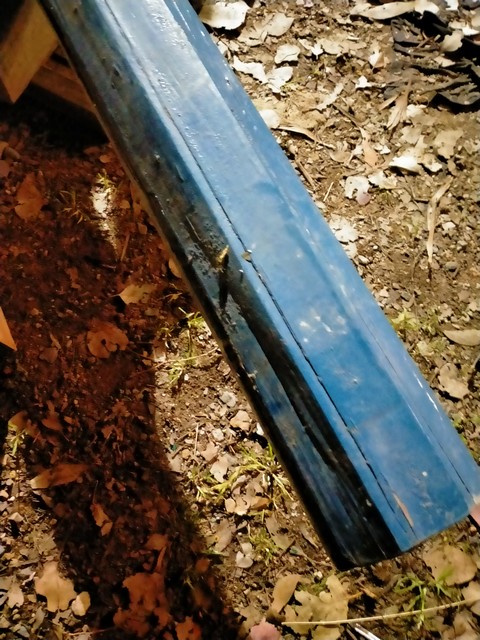
The stem of 3R is a solid white oak coated with extra thick fiberglass. Unfortunately there is evidence of delamination. I am thinking some of this fiberglass needs to be removed to bare wood. Then I am debating primer and paint versus coating with extra thick epoxy.

Pictures of stem with close ups of areas of fiberglass failure:

I am looking forward to bringing 3R back to the shape she was in 10 years ago. I am also really excited to sail her. I would love any advice from the Chebacco.com community regarding how to best repair the stem.

Most importantly, I am looking for a mentor to help me learn to sail this boat. If anyone is interested and able to help, please let me know. I just trailered this boat from Washington state to North Carolina, so a few more hours drive to sail with someone who knows these boats is something I would be happy to do.

Thanks,

Mike

mikecapriola@gmail.com

Chebacco News 79 – Lapstrake table of offsets

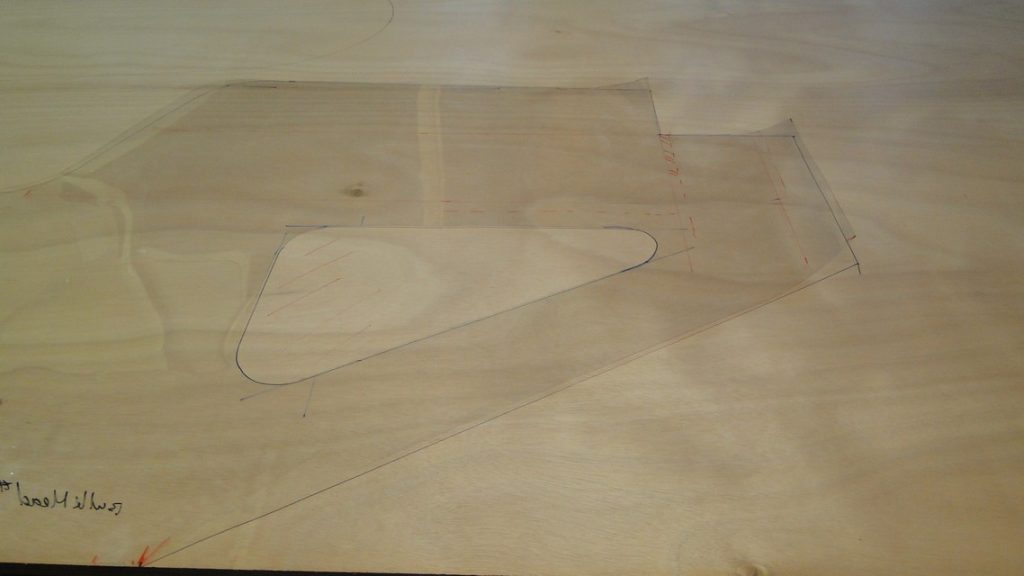
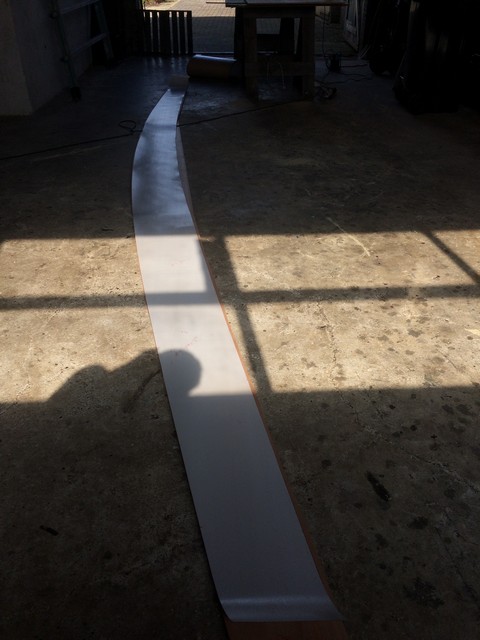
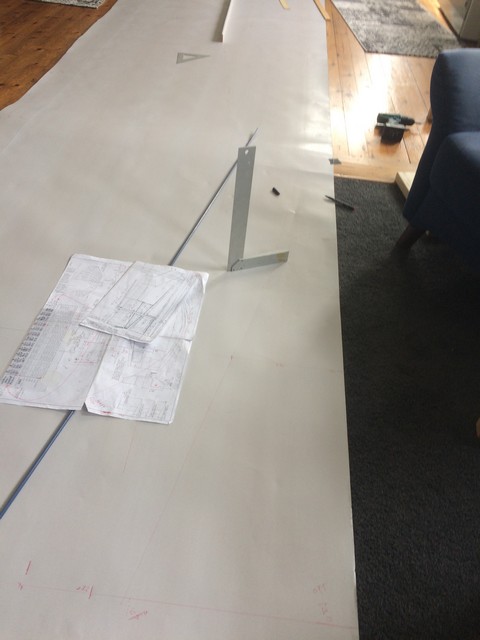
I received a request for the table of offsets for a lapstrake chebacco. Here I have posted an Excel file with all of the offsets in Feet-Inches-eighths and also mm for both the 19’6 and the 25’4 versions. I found it easier to work in mm here in Australia (Inch rulers and tape measures are available but not so common) so I created these spreadsheets to make the conversions. It will probably require a bit of studying to work out what you are looking at.

The first table for each boat shows the height above a base line of the buttockline at each station. You will need to refer to the drawing for the location of each station – you may notice that Phil numbered his stations in different directions for the 19′ and the 25′ versions. We will never know why. The base line is the bottom of the keel for the 19′ version and 2 inches below the bottom of the keel for the 25′ version (I assume Phil changed his mind somewhere in the design process about the depth of the keel – but kept the table of offsets.) The buttockline is the line where a vertical slice would go through the hull. The vertical slices are 12″, 24″, 30″ and 36″ from the centreline for the 19′ version, but only the 24″ buttock is given for the 25′ version. This table also has the height of the deck and bottom panel. It looks as if I have found a small error in Phil’s deck height at station 1 during my analysis.

The second table for each boat shows the width from the centreline (so-called “half breadth”) of the waterline at each station. The waterlines are the lines where horizontal slices meet the hull. This is just like the line where the water meets the hull when the boat is afloat.

In theory you could build a hull using only one of these tables – but in practice you need to cross reference some little details that can’t be worked out with only 1 table.

Andrew

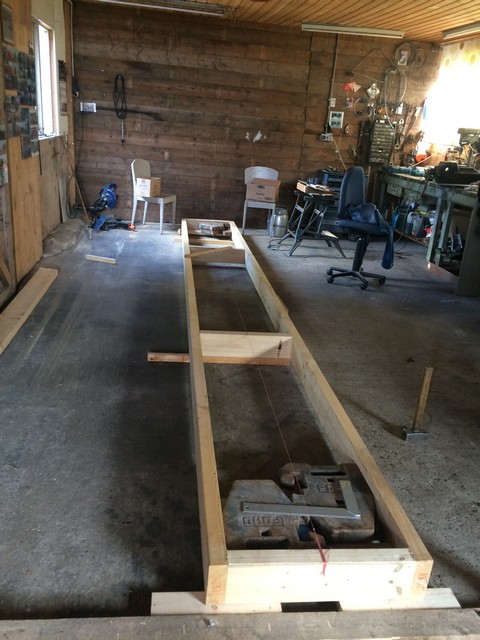
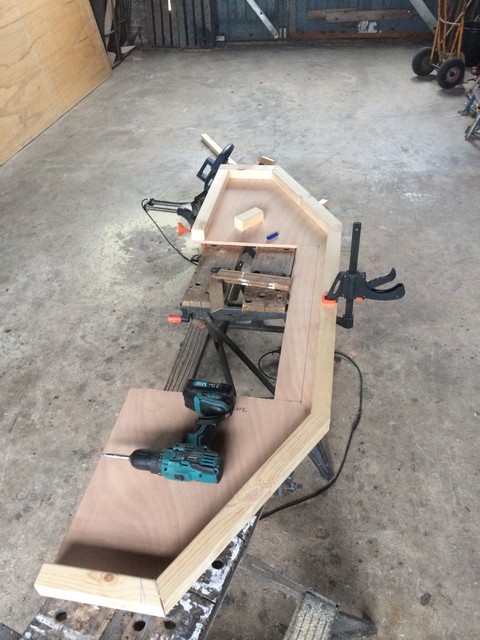
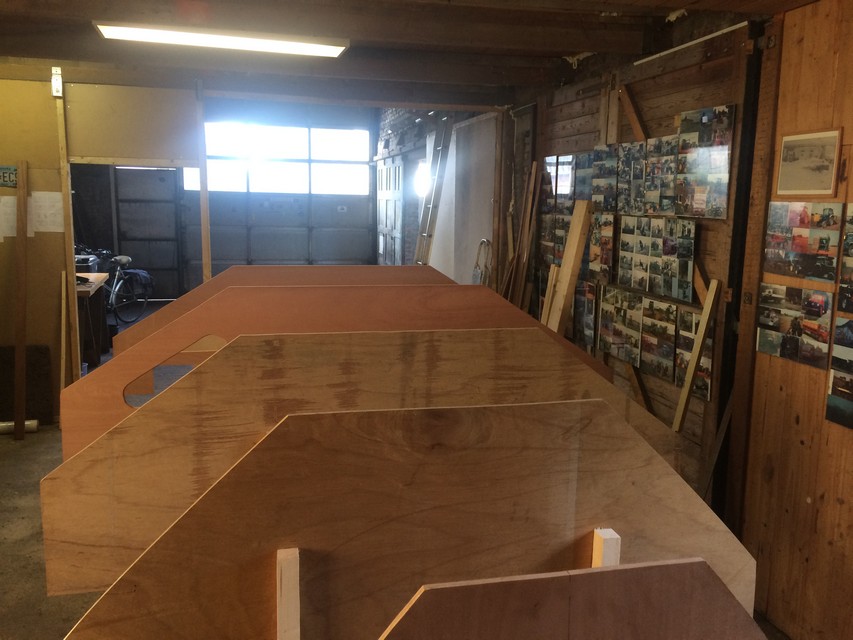
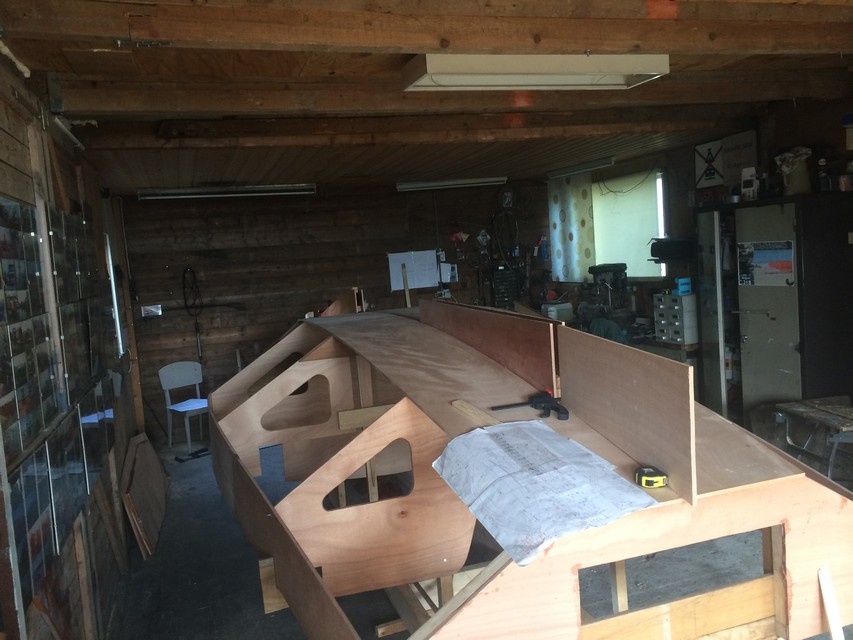
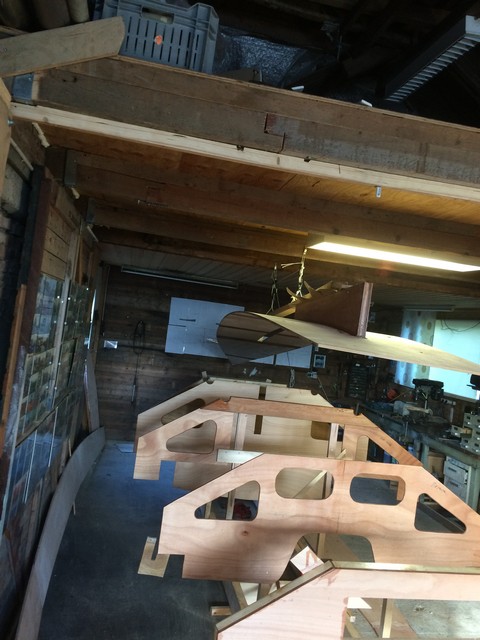
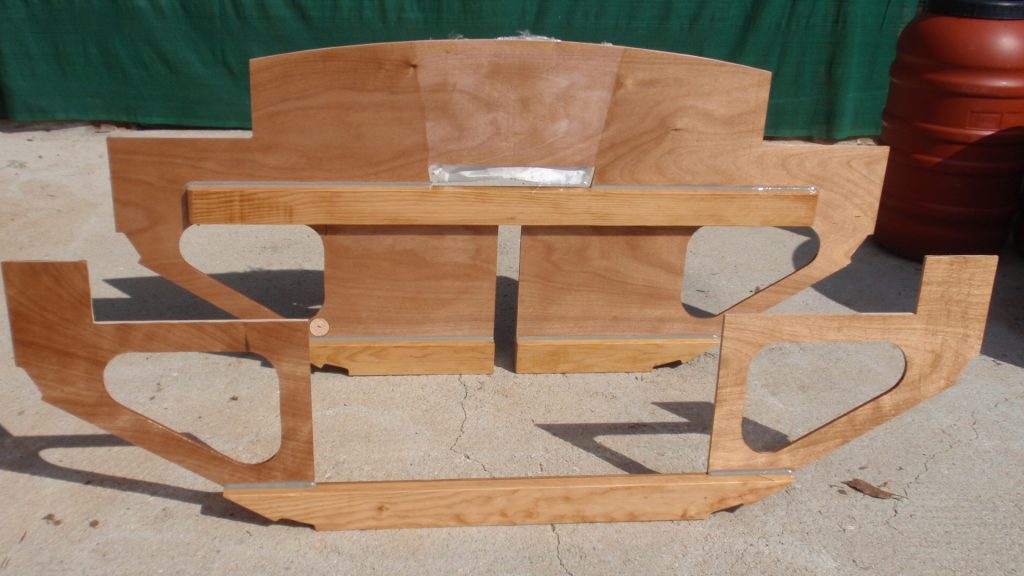
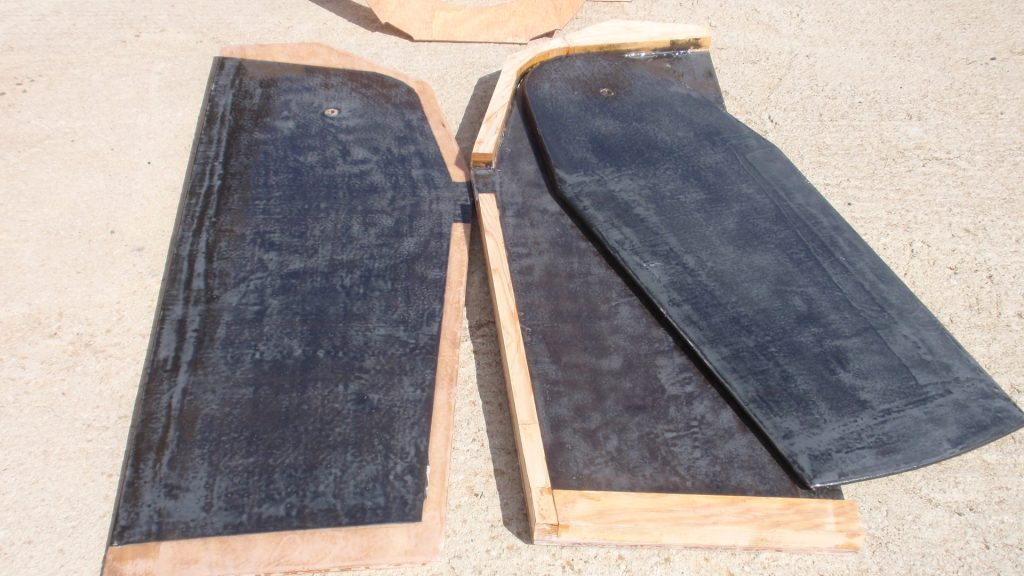
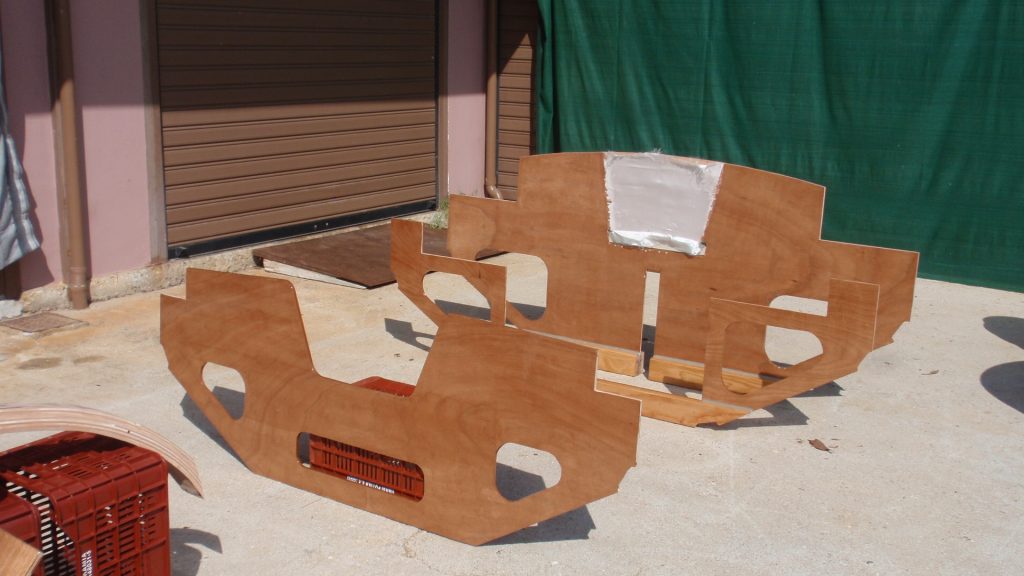
Chebacco News 76 – a Greek Chebacco

[message sent in 2022, lost, and rediscovered in 2023. If the Gods are with Dimitris he should be sailing by now!]

Hi Andrew,
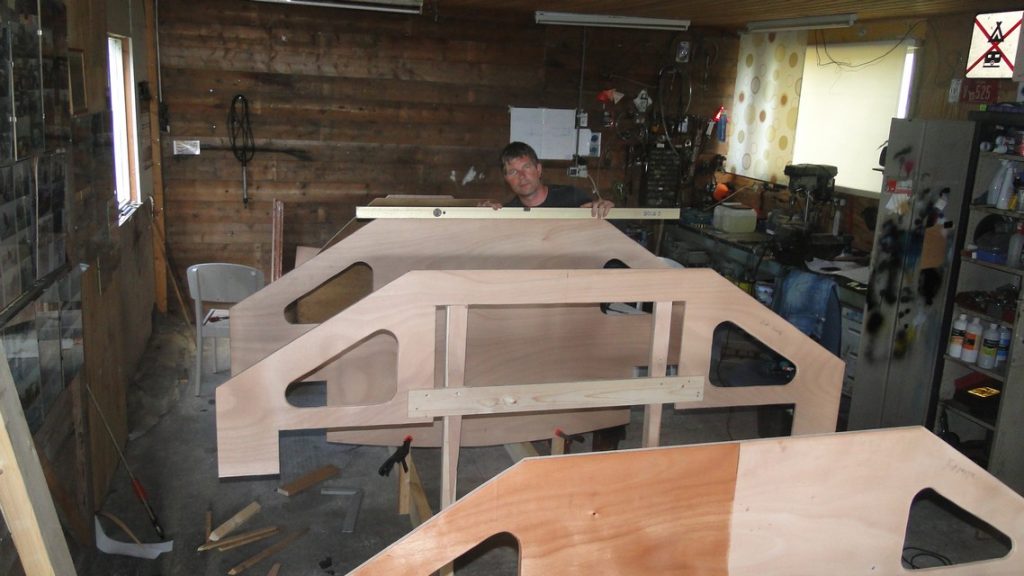
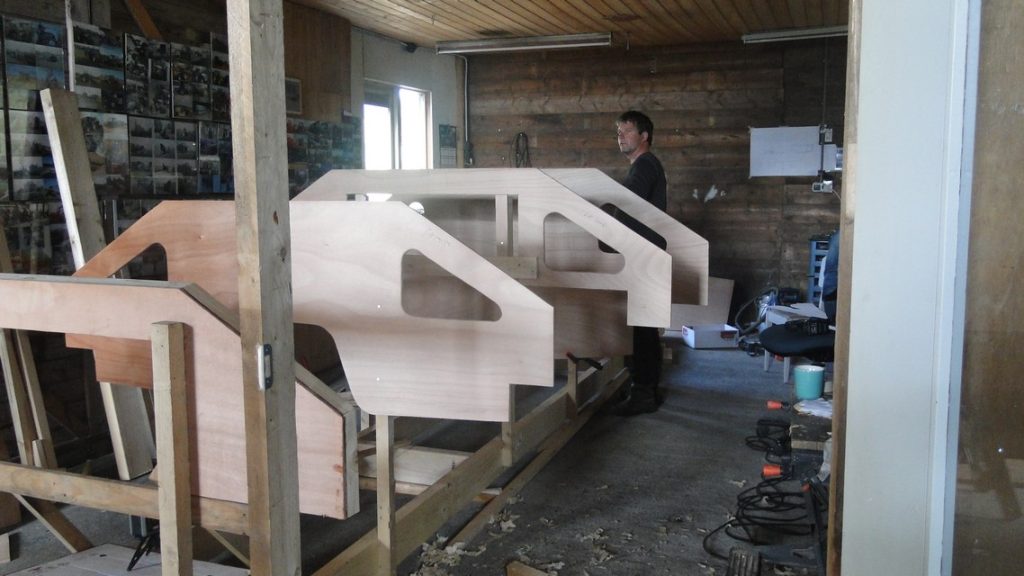
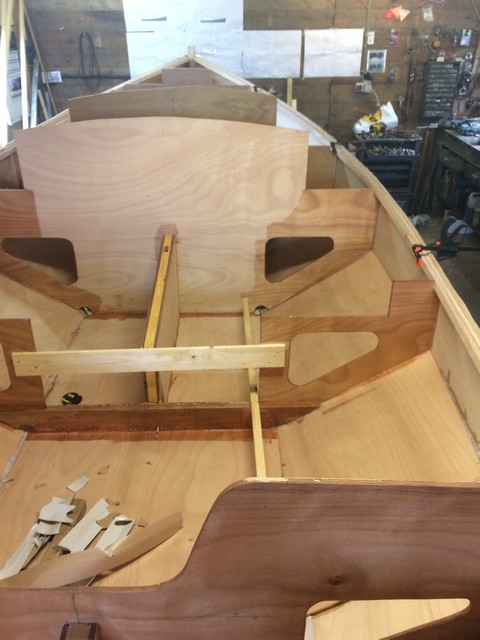
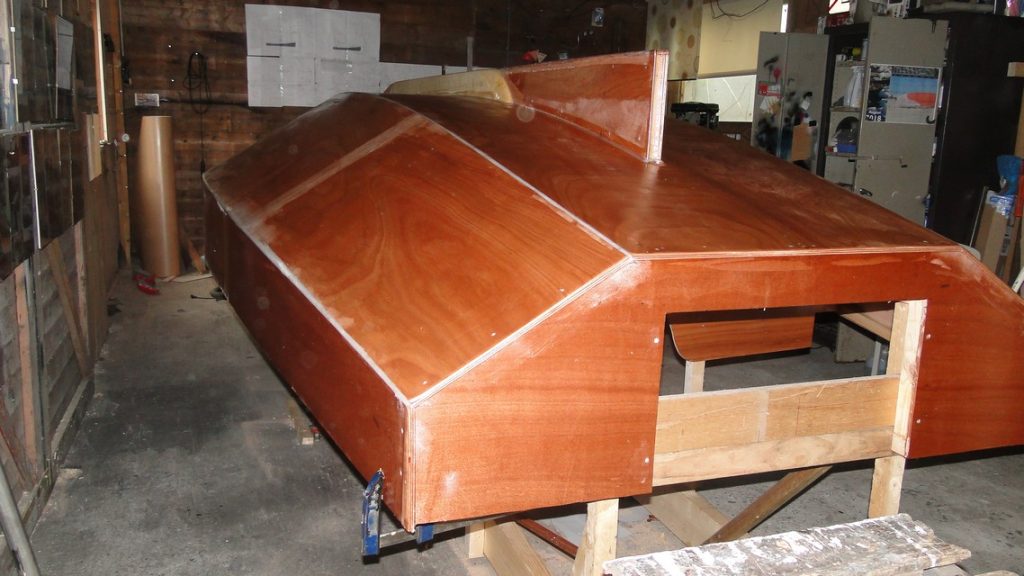
I started building a Chebacco last year although I’ve had the plans from H. Payson since January 2019.
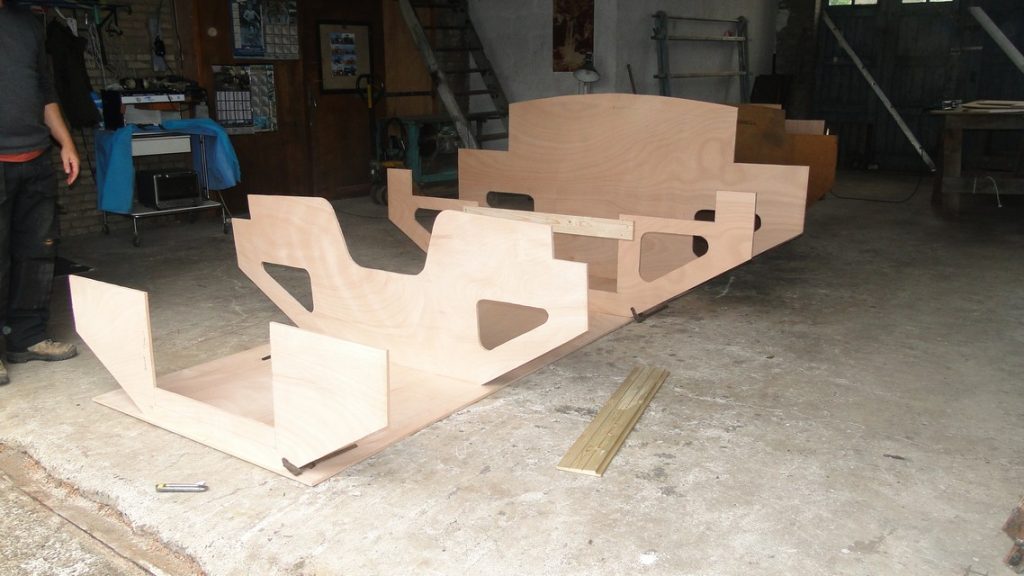
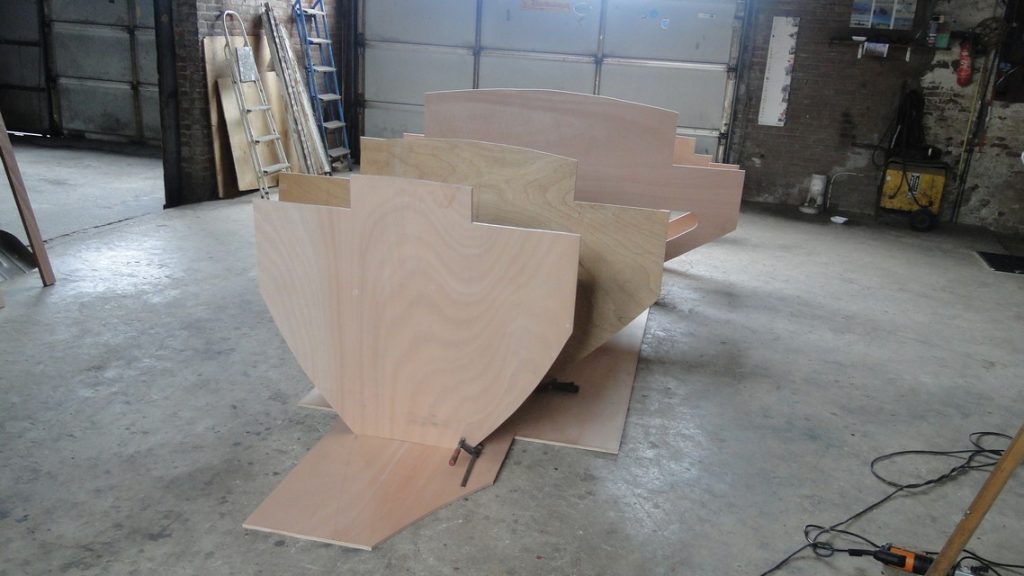
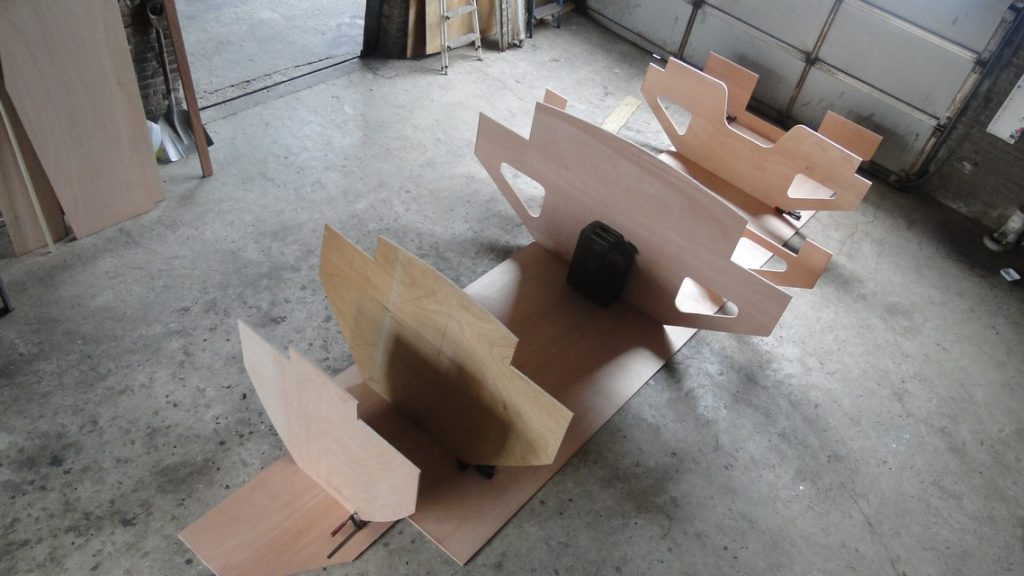
Here are some pictures of my progress so far, for posting in the Chebacco-site. More construction pictures are available should someone be interested.
I intend to go a little faster now, but as we Greeks say, “Men may want, but Gods decide otherwise.”

Dimitris P.

OLYMPUS DIGITAL CAMERA

Chebacco News 75 – Ton’s cruise, mast repair

Ton Visser sent me some photos of a weekend cruise to Vlieland (Holland).

I do like the “Jib and Jigger” setup for when the wind blows [Andrew].

Mast repair

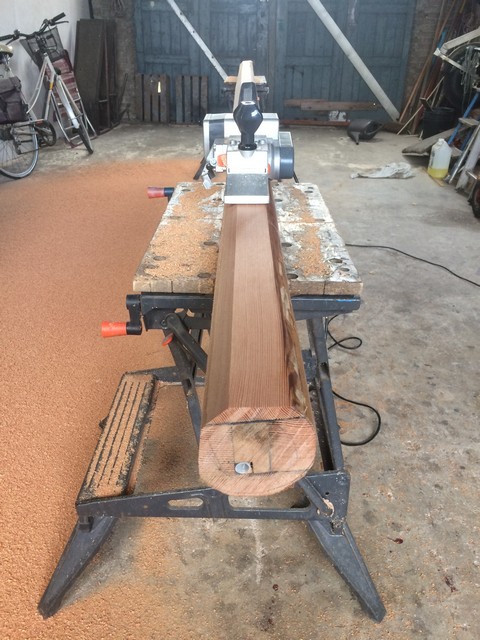
My Chebacco has been off the water for a bit – career change/covid/etc – which has lead to a bit of maintenance. The old rusty trailer has been replaced with a less old/less rusty trailer. I built a shed to park Khaos in rather than tarps that continually blow off and deteriorate. The mast was exposed to the weather for a while and I noticed some rot in the base.

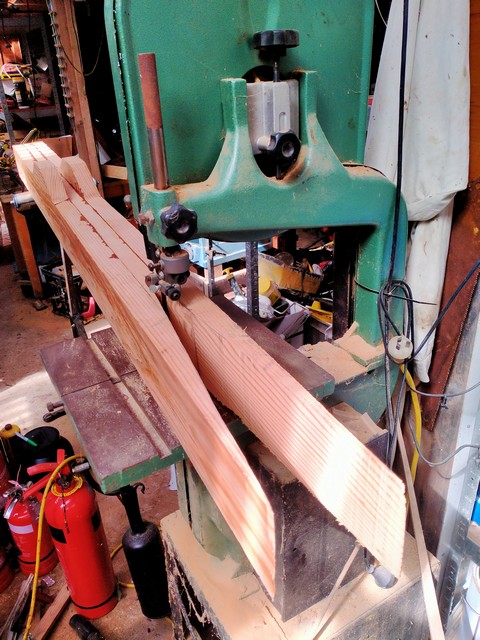
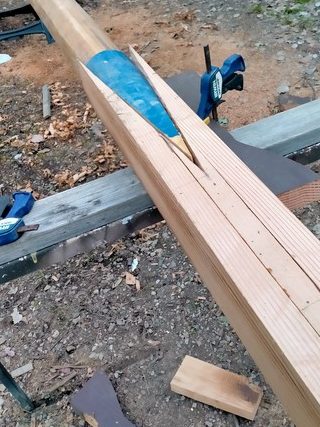
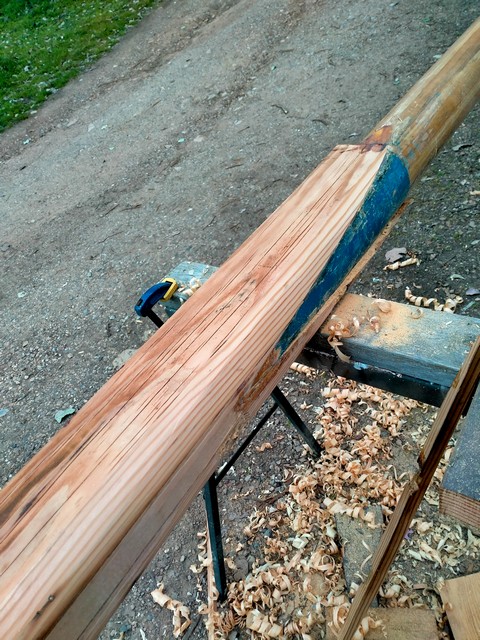
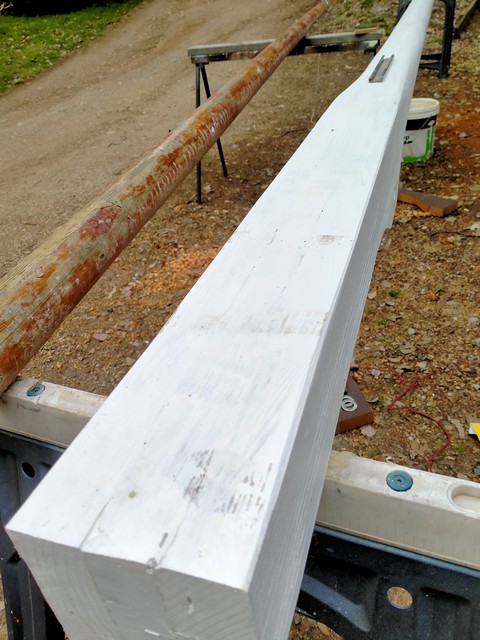
I used Hoop Pine birdsmouth for the mast – maybe Hoop Pine was not the best choice, or maybe I just did not look after the mast well. So I have made a solid Douglas Fir base and scarfed it in. I added 500mm in length to the mast and added a sheave block. This time the mast will be painted, it does not look as sexy but it will no doubt last longer.

Chebacco News 74 – Dennis Gamble’s photos

Hi Andrew,

I launched my Chebacco “Moonshine” for the first time last year.  Here are some pictures from last year’s sailing for the website if interested.

I sail mostly in Wisconsin, with Lake Dubay being my home lake.

-Dennis Gamble

Thanks Dennis

An Appeal For Support

By mid 2022 I will have been hosting this site for Chebacco owners for 8 Years. There have been lots of interesting posts but I rely on the community out there to send me photos and stories to include. It is a challenging world out there at the moment – but I am sure you are still thinking and working and sailing Chebacco’s, so keep the information coming. Email me at <my given name>@chebacco.com

Also, I am up for some web hosting costs this August ’22 (about US$100 per year x another 8 years), this amazing site is too big for a free host. Thanks to everyone who has made a donation in the past – but if you haven’t or you wish to make another donation I would appreciate your help. There is a donate button on the front page at the bottom.
Andrew

29th March 2022